
Working in social can give you a complex. You don’t have to listen hard to hear the same criticisms on repeat. And that’s not to say there is no truth in that. But from the inside, it has also forced our industry to rethink what creative craft actually means.
As a traditional creative turned social, I’ve realised the fundamentals haven’t disappeared. Great copy still matters. Beautiful art direction still matters. Humour still matters. The difference is that they’re no longer enough on their own.
Today, our work has to survive in an environment where people are scrolling at speed, engagement is pivotal, and platforms decide what deserves to be seen. We’re not just creating for an audience; we’re creating for the conditions set by ever-changing algorithms that never fully reveal all their cards.
That makes our job pretty tricky. We still need to stop people in their tracks. But now we also need to understand the visual language of creators, the behaviours platforms reward and the kinds of content people want to publicly engage with. Craft hasn’t become less important. It’s expanded.
So how do we craft for a digital native world?
Of course, every brief comes with its own nuances, but I’ve found myself coming back to a handful of principles that have become a red thread, specifically when crafting paid social ads. To talk about these, I’d like to use a recent Social Club campaign as an example.
Around nine months ago, we started working with The National Lottery to launch the UK’s biggest ever lottery jackpot. With the potential to win over £1 billion (yes, you read that correctly), the brief for Powerball was simple on paper: stand out. Whatever we created had to feel different, and more importantly, it had to resonate with an audience that largely doesn’t believe in the pay-offs of lotteries… an easy ask you might say.
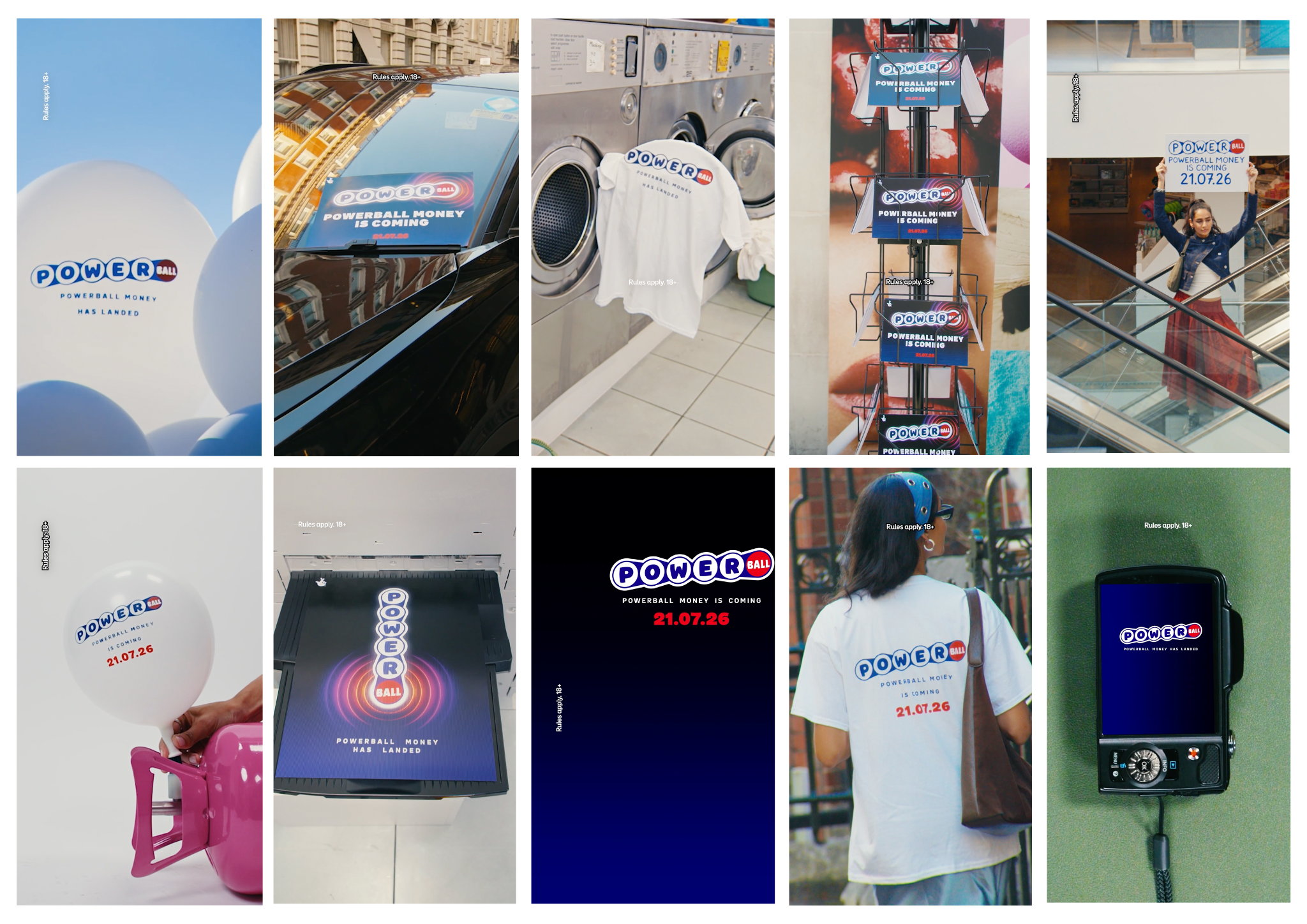
In total, we created 10 paid assets to run across the tease and launch phases of the campaign. All of which were crafted using the following techniques:
1. Craft for an Identity
Sadly, watching or reading is not enough anymore. Social asks far more of its audience: likes, comments, shares, saves, rewatches; all of which are a huge ask.
Why? Because everything we engage with online becomes an extension of our personality. Our feeds are curated reflections of who we are, what entertains us, what we aspire to, and what we want others to associate us with. So for a brand to earn a place in that world, and be rewarded with the same level of attention, is kind of a big deal.
To give ourselves the best chance of earning it, I like to start by putting myself in the atmosphere of the audience and understanding the cues they instinctively respond to. So I ask questions. What do they find stimulating? Who do they want to hear it from? How are they interacting? Do they want to learn something? Be visually aroused? Be weirded out? Because if we can understand what makes them stop, we can earn a place in their world, making them and the (pesky) algorithm happy.
E.g. With the Powerball campaign, we knew the social users we needed to talk to don’t care for the lottery. But they do care about aesthetically beautiful visuals and the world of fashion and beauty. So this was our in. If we could reflect these passion points in the work, we could communicate our message.


2. Own Your Branding
When it comes to branding, organic and paid social are two very different beasts. But on the topic of paid, the reality is simple: we’re still creating ads. They just happen to be for an audience with a hyper-sensitive radar for being sold to and a finger milliseconds away from swiping.
So it’s really about finding a way to play into brand assets, rather than leaving them as an afterthought. Front-loading brand cues are essential to avoid misattribution in those first split seconds. So the craft comes down to how you do it; weaving those assets into a native, visual language so compelling that the viewer consciously chooses to keep watching anyway.
In Powerball’s case, we had an entirely new visual world to communicate, so we made branding and messaging the hero. From the very first frame, we crafted an enigmatic, visually arresting aesthetic that gave the impression Powerball had been ‘spotted in the wild.’ It gave the work an ‘IYKYK’ feeling, creating just enough intrigue to turn a fast swipe into a view.


3. Simplify the Simple
People on social are masters of brevity (as much as we hate to admit this). They know how to land a joke, express a feeling, or start a debate in just a few nonchalant words; and our creative needs to match that efficiency. As one of our wonderful CDs always says, paid ads are like “moving 6-sheets”. Keeping that in mind is crucial when writing or visualising paid assets, forcing you to strip back the work when it’s so easy to get lost in the noise of social styles and ever-evolving trends.
For Powerball, every asset was strictly 6 to 10 seconds long. As much as we were tempted, we made sure there was zero narrative, just one simple action. A hand reaching for a postcard. A crash zoom. A girl on an escalator entering the frame. Stripping away the story didn’t weaken the work, it made each asset a bolder statement.


So…
Crafting for a digital-native world doesn’t mean craft no longer matters as much. It means we now have to stop someone scrolling, relate to them, reflect who they are, establish the brand, and land the message... all in about six seconds.
In my opinion, that isn’t the death of craft. It’s just the hardest, most exciting version of it we had to tackle yet.
By: Charlotte Kelly, Senior Social Creative, VCCP Social Club